Project Information
Project Name: Guangdong Rural Credit Data Center – Lighting Design
Project Location: Foshan, Guangdong Province
Year: 2025
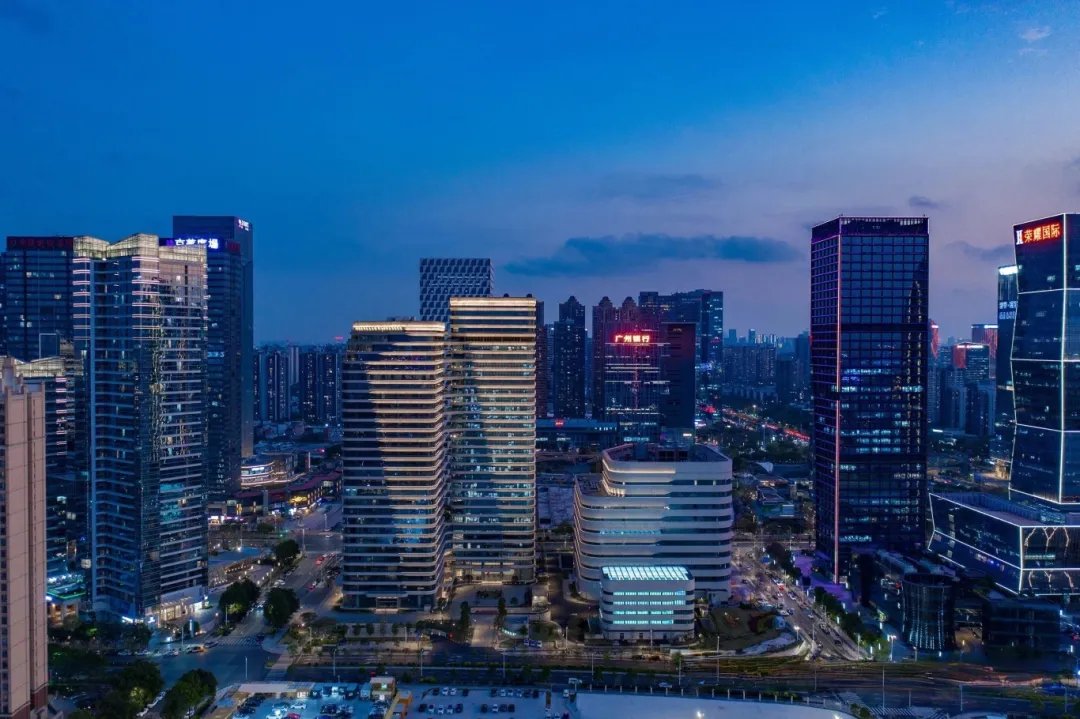
The Guangdong Rural Credit Data Center is located in Foshan, Guangdong Province. The project consists of two buildings with heights of 139.1 meters and 126.5 meters respectively. Both towers feature a distinctive architectural design, with the main façade framework formed by layered horizontal slanted lines. Variations in line thickness are skillfully integrated, creating a unique architectural language.
In the lighting design, emphasis is placed on highlighting the building’s horizontal architectural elements. Without compromising the interior environment, a variety of lighting techniques are employed to create diverse light and shadow effects. When viewed from above, the illuminated outlines of the data center resemble two giant “diamonds,” vividly expressing Guangdong Rural Credit’s concept of “diamond-level service.”
This distinctive lighting approach allows the buildings to stand out clearly among the surrounding cityscape, creating a strong sense of identity and memorability.
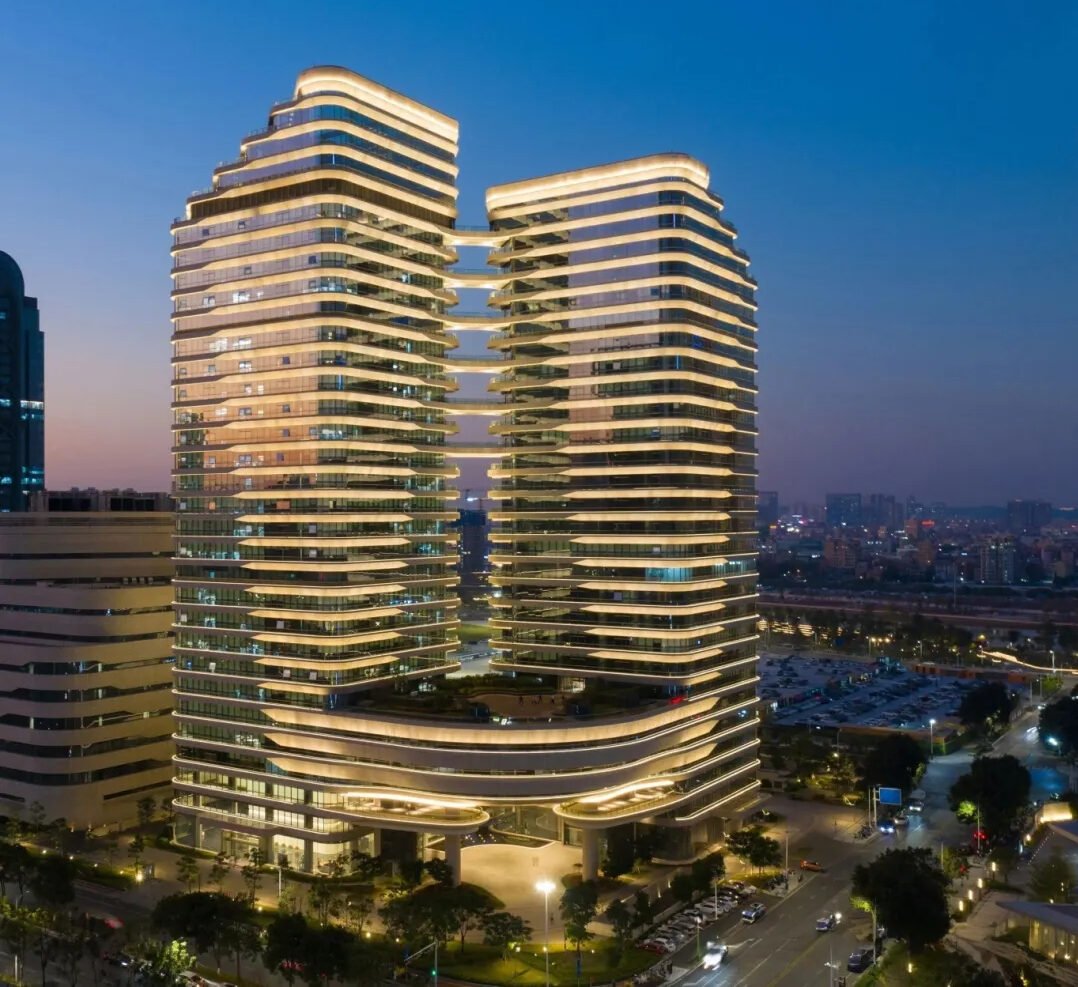
The lighting not only reinforces the structural characteristics of the horizontal slanted façades, but also responds closely to the depth and texture of the architecture. While preserving the building’s defining elements, the lighting transitions gradually from brighter at the top to darker at the bottom, achieving a seamless integration of light and architecture.
The two towers are connected by six skybridges, a design element that subtly conveys Guangdong Rural Credit’s service philosophy of “hand in hand commitment.”
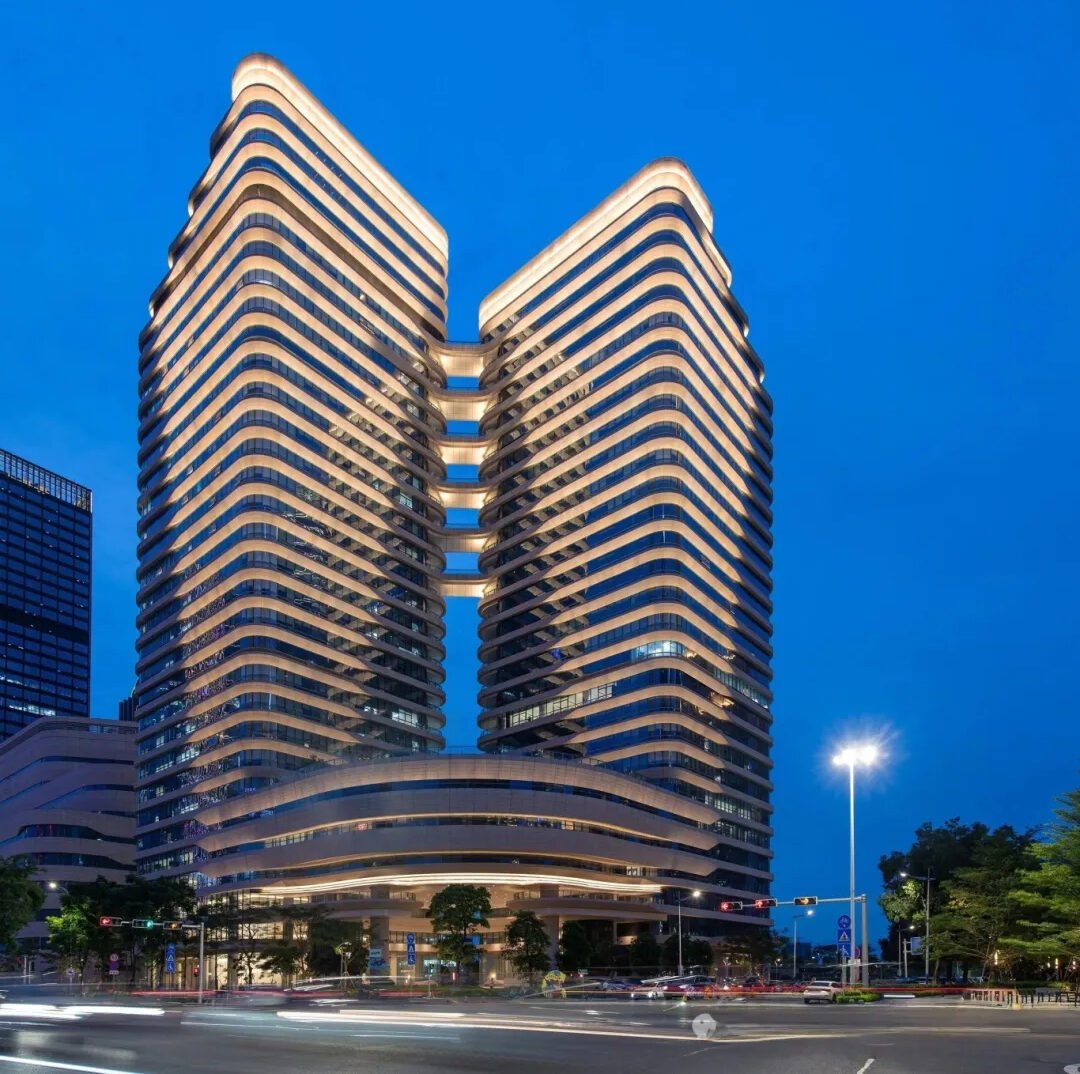
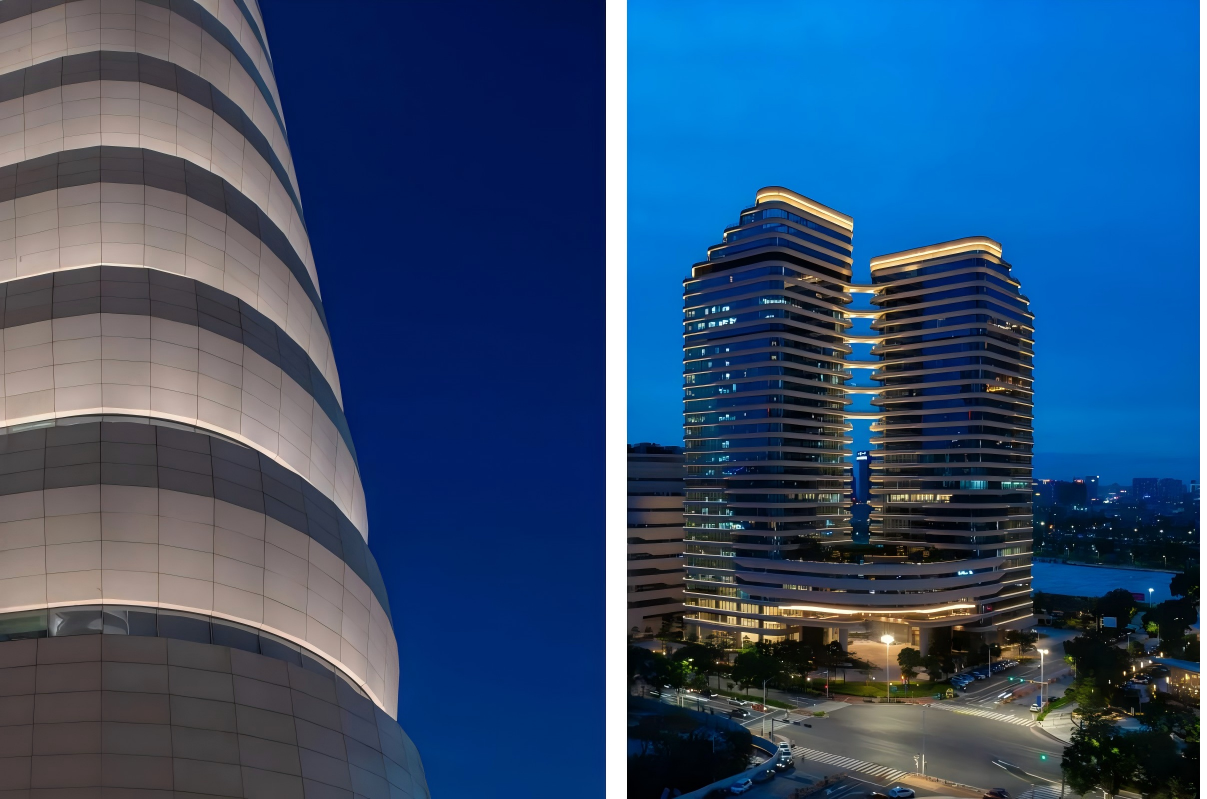
Under illumination, the building’s primary framework of horizontally layered slanted planes directs light toward the three-dimensional edges and transitional surfaces of the inverted triangular structures. This creates a strong contrast between light and shadow, enhancing the geometric sharpness and spatial depth of the inverted triangles. As a result, the façade presents a visually guided hierarchy of light and shadow, emphasizing these triangular forms as iconic architectural features.
The careful coordination between façade design and lighting ensures that the building reveals different visual experiences when viewed from various perspectives.
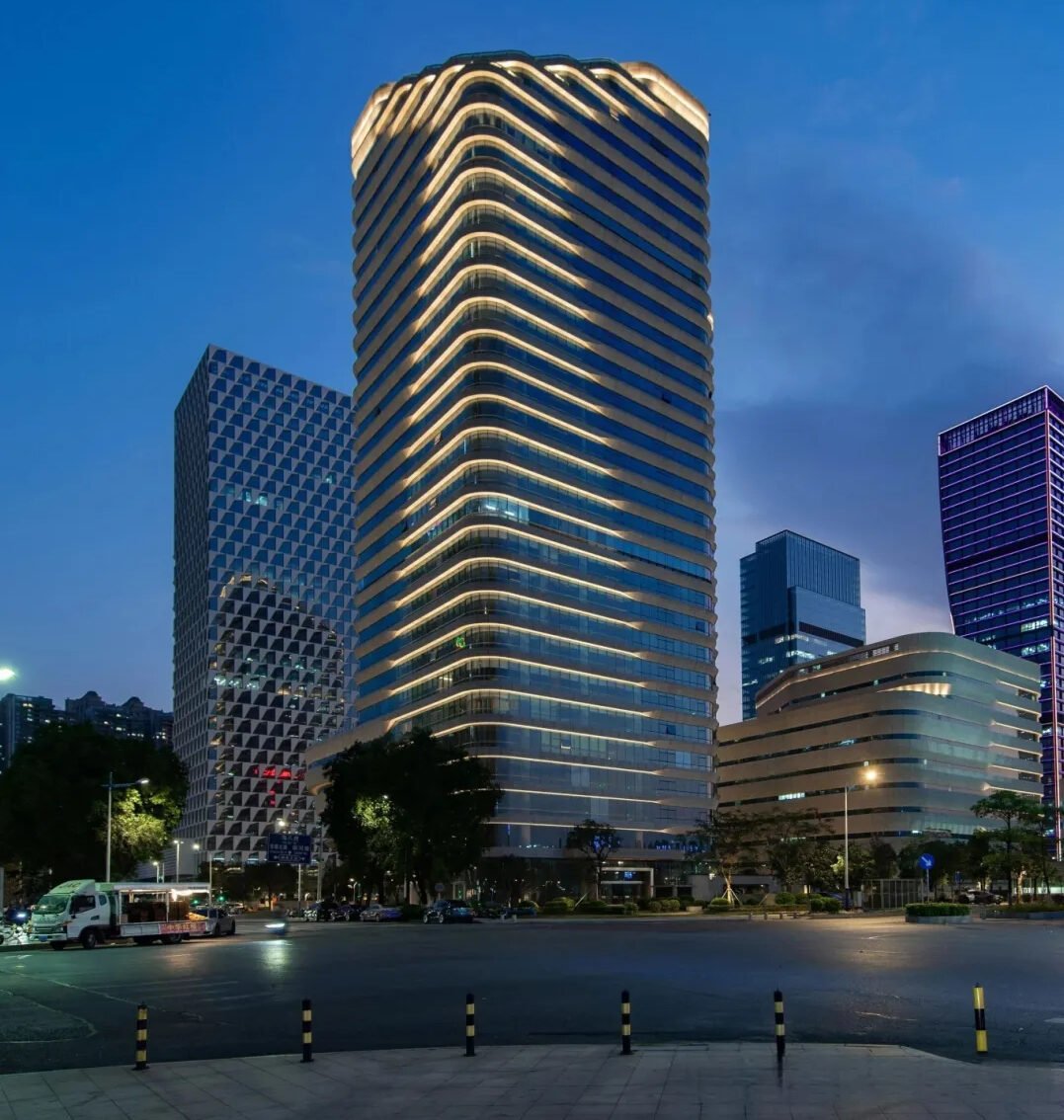
By utilizing the three-dimensional shading created by the building’s own structure, light is naturally cast onto the façade, forming shadow patterns that closely align with the contours of the inverted triangular geometry. This further accentuates the triangular forms, reinforcing the façade’s architectural identity in both illuminated and shaded areas.
The horizontal slanted planes are evenly illuminated, clearly expressing the architectural lines and allowing the building to stand out as a distinctive presence in the night sky. At the same time, luminaires concealed within the architectural lines keep the façade visually clean during the daytime and prevent glare from affecting interior spaces.
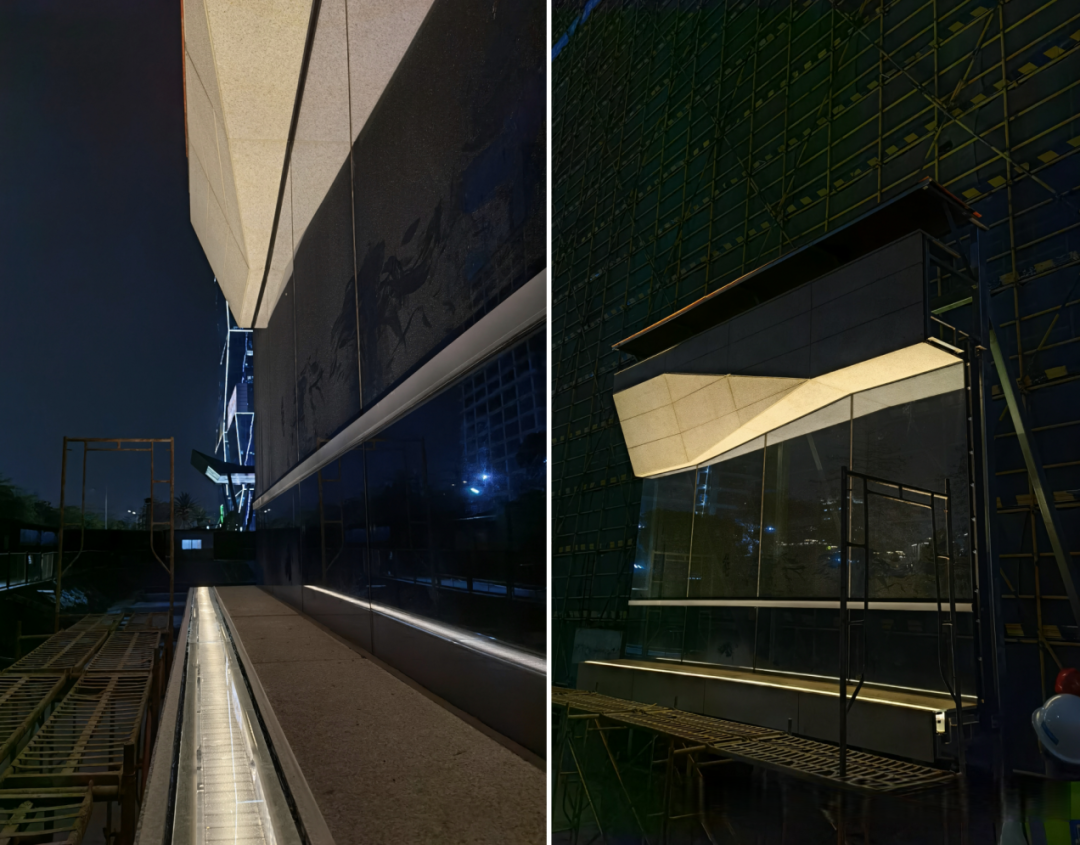
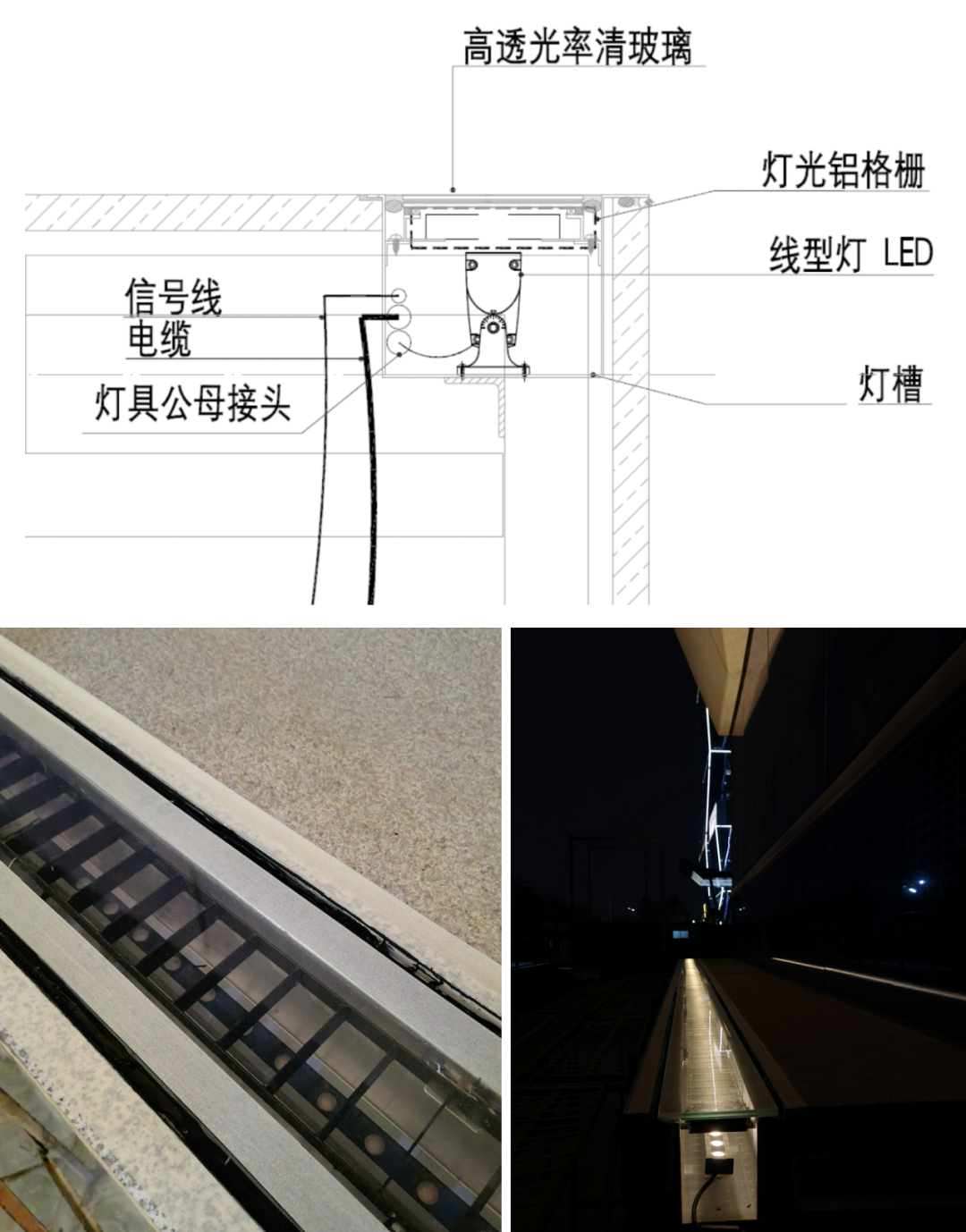
Upward lighting is evenly distributed to authentically reveal material textures and façade characteristics, while the interplay of light and shadow enhances the depth and layering of the elevation.
Light introduced from the sides creates a façade with clear contrasts and smooth transitions between light and shadow. Through precise control, illumination is accurately directed onto the slanted surfaces, resulting in an architectural lighting environment with a strong sense of rhythm and sequence.
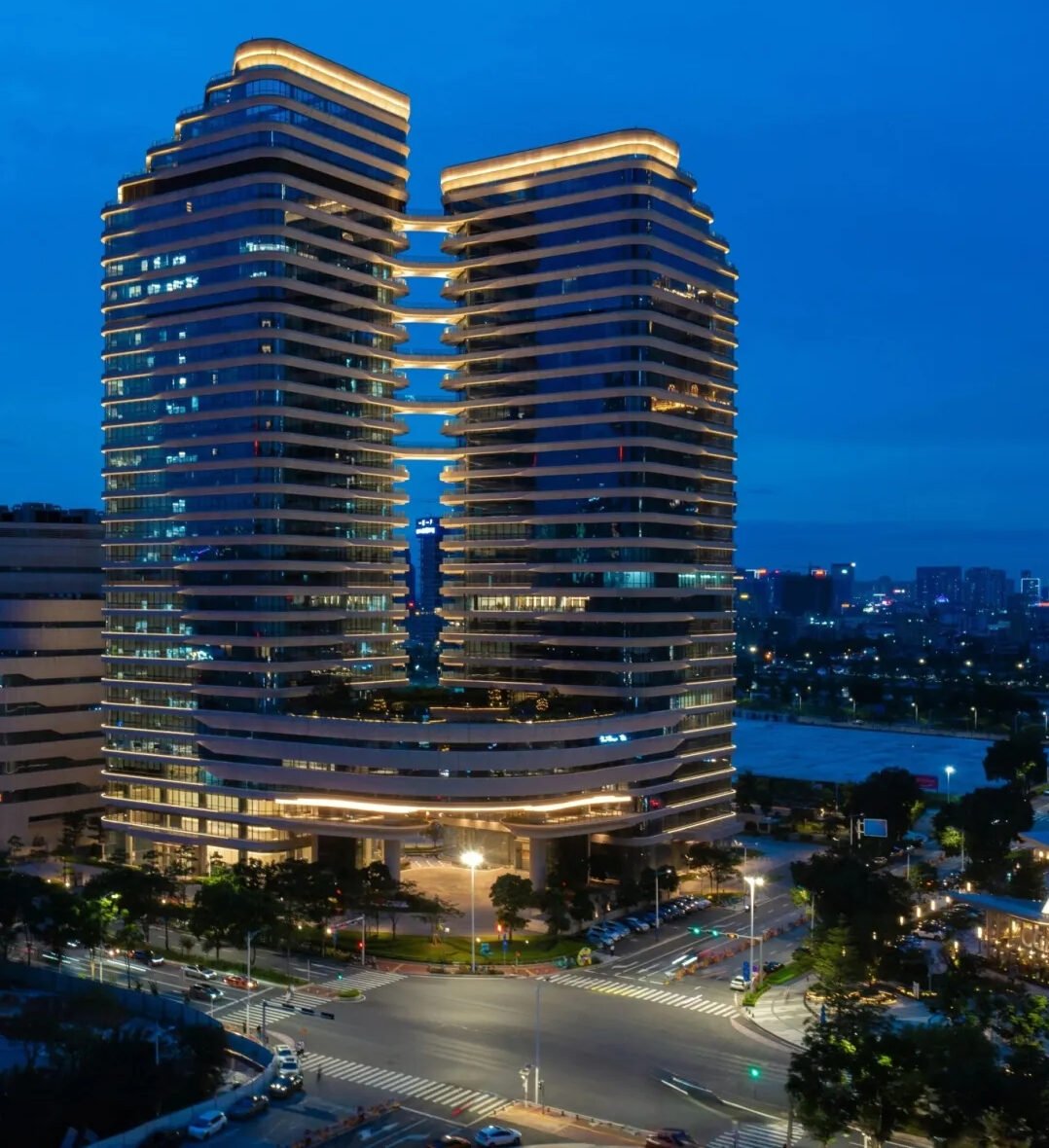
In special lighting modes, light control continues to respond closely to the architectural features. By intentionally creating darker zones, light is allowed to “penetrate” the façade, producing an interplay of brightness and shadow that evokes an immediate emotional response to the beauty that light brings to the built environment.