Project Information
Project Name: Xinli Yingfeng Center
Project Location: Panyu District, Guangzhou
Year: 2024
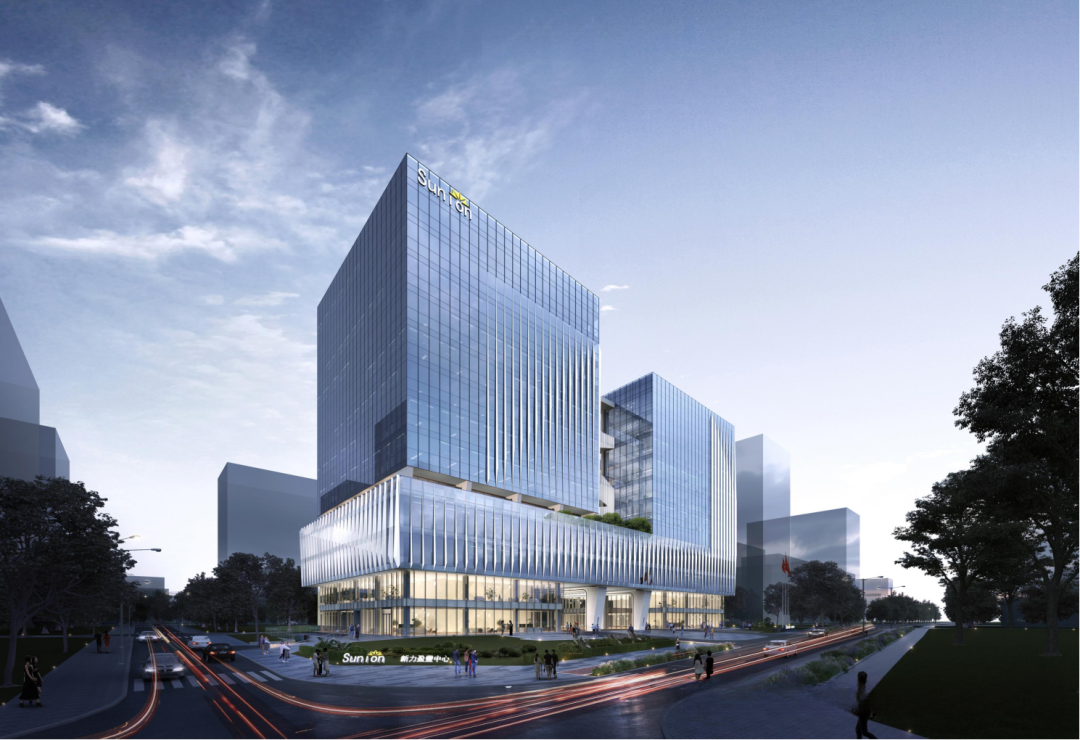
Xinli Yingfeng Center is located in Zhangbian Village, Nancun Town, Panyu District, Guangzhou, within the Panyu Industrial Headquarters Economic Park. The southwest side of the site borders the Panyu Energy-Saving Technology Park, and the surrounding area benefits from excellent transportation access.
The project site covers an area of 8,367 m², with a total gross floor area of 33,432 m². The development consists of Tower A and Tower B. The façades adopt a clean and modern architectural style, featuring blue-gray glass as the primary tone, complemented by rhythmically varied white vertical fins. These vertical lines form the main compositional elements of the façade, making the building elevation more dynamic and visually engaging.
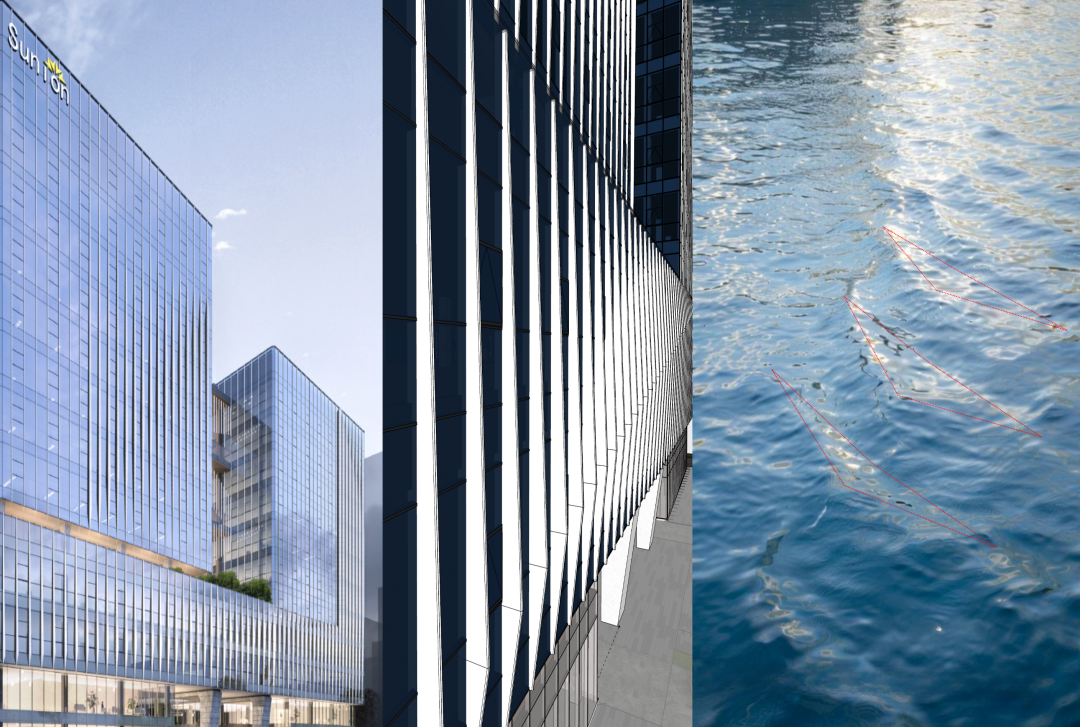
The vertical decorative lines on the façade are key architectural features. Each vertical element varies in height, reaching its highest point at the corners and gradually descending toward both sides, forming irregular triangular shapes. These triangles are arranged in a controlled pattern of height variations, creating a façade sequence with rhythm and visual cadence.
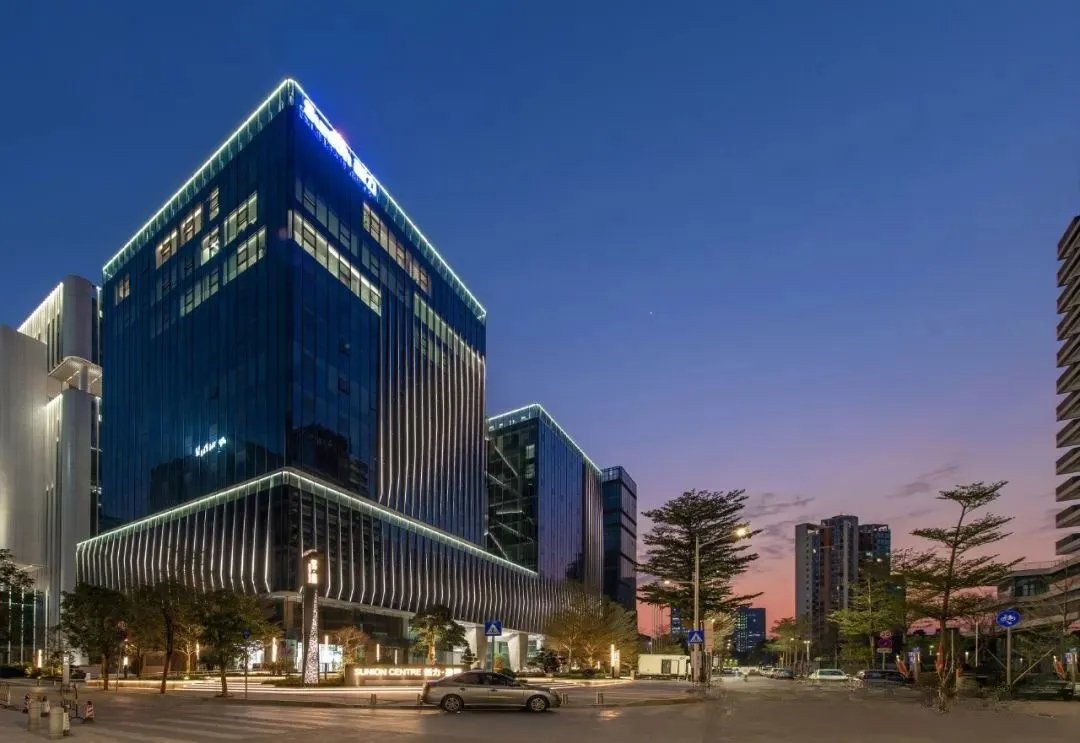
Due to the relatively small distances between buildings on the south and west sides, sightlines are restricted and indirect light interference is more likely to occur. For this reason, the lighting design focuses primarily on the east and north façades, allowing the architectural night view to be presented within the widest possible field of vision.
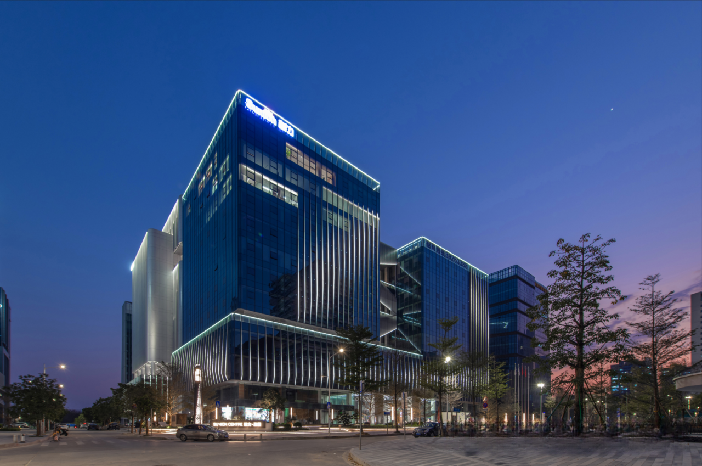
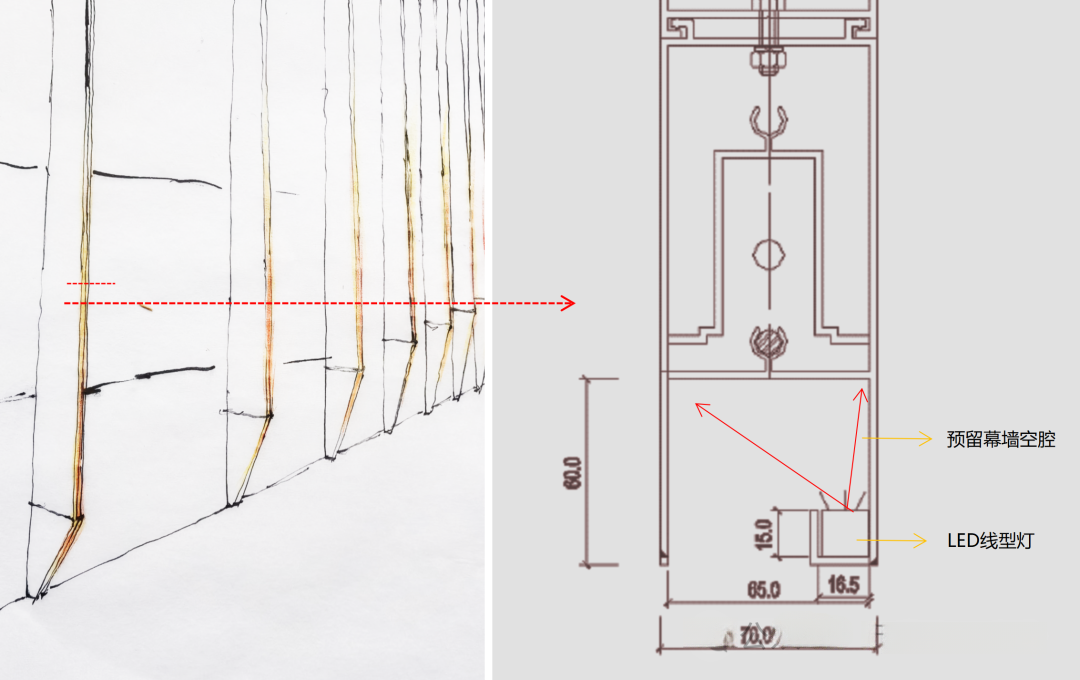
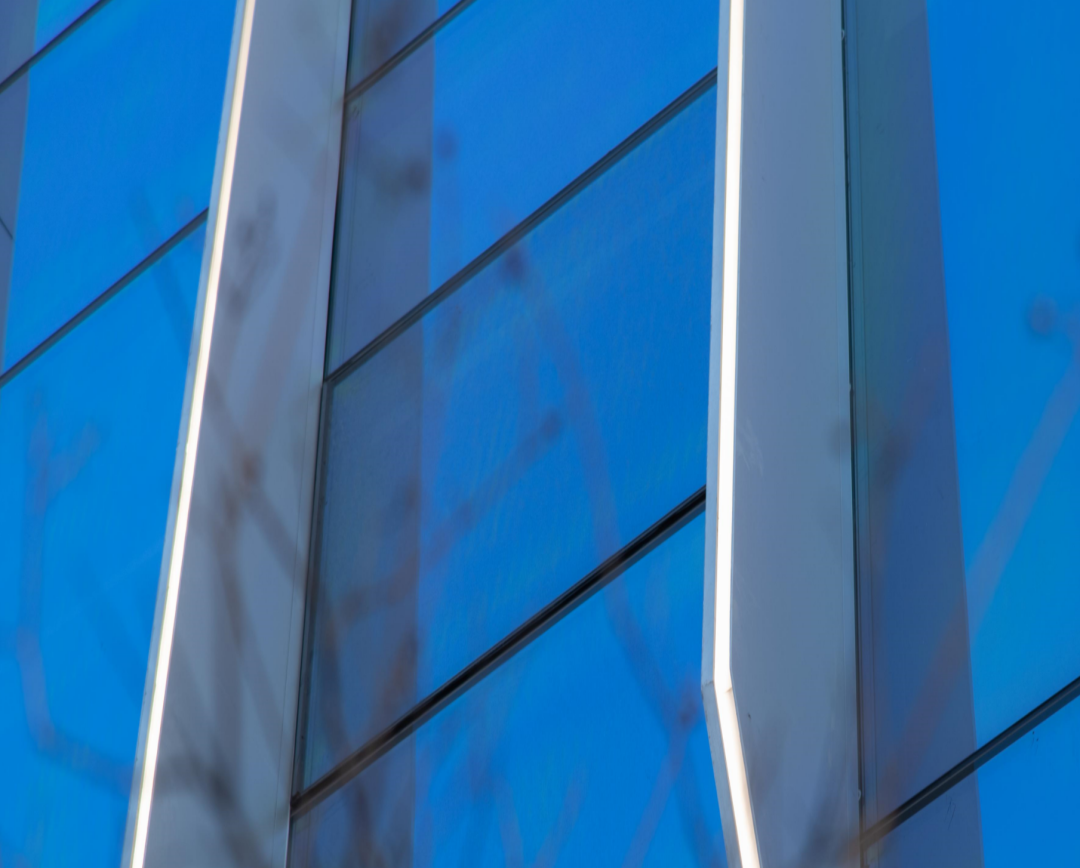
To avoid direct glare, cavities and installation slots were reserved to conceal the luminaires within the façade. Indirect lighting is used to reflect light outward, ensuring that the fixtures remain invisible during the daytime while producing soft, integrated illumination at night. Under this lighting treatment, the vertical lines of the façade are clearly expressed, and their rhythmic variation is unified through a strong sense of sequence.
Between Towers A and B, lighting is combined with inclined grille elements to establish a visual connection between the two structures. The grilles are gently illuminated, while glimpses of the skybridge behind them are revealed through the gaps, forming a three-dimensional composition of light and shadow. The spatial depth of the skybridge is concealed behind the grilles, while the grilles themselves provide a planar visual layer, allowing the two towers to connect in a natural and harmonious manner.
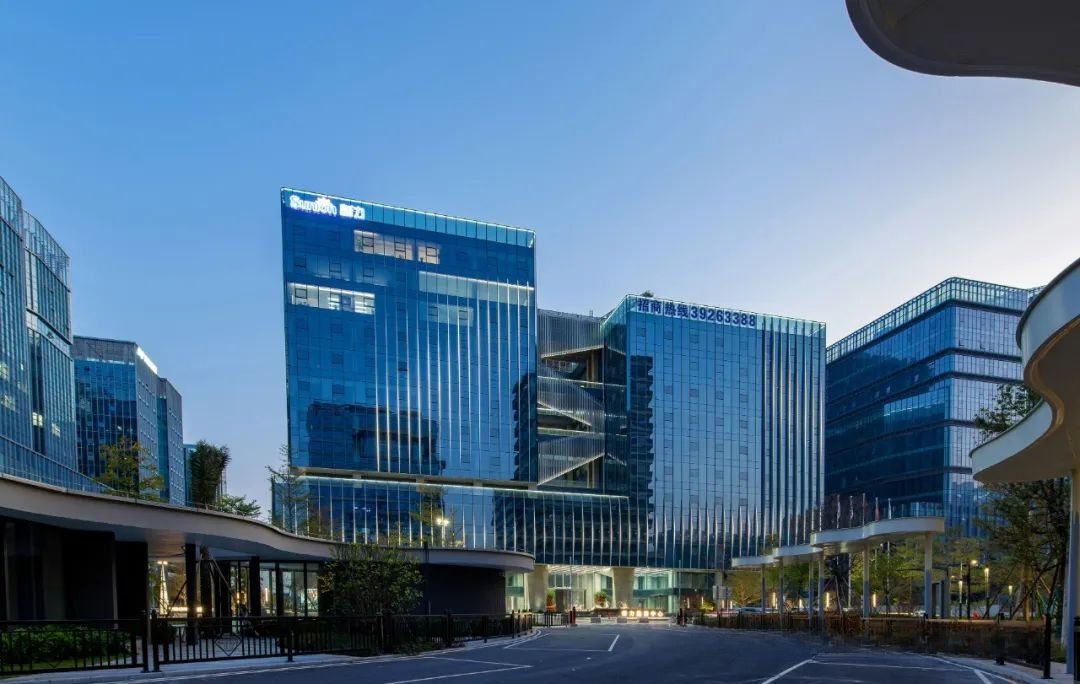
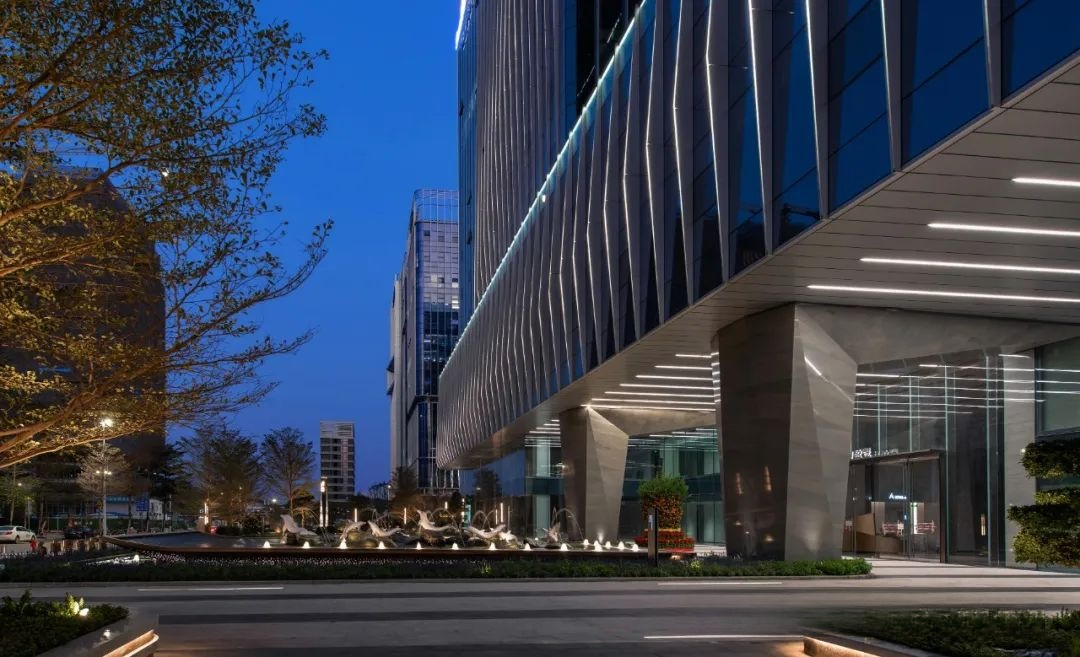
The vertical façade lines, the vertical grilles of the skybridge, and the linear lighting at the main entrance create a cohesive relationship between elevation and planar spaces. Using consistent design elements expressed in different ways, the architecture achieves a balance between unity and variation, resulting in a harmonious yet rich visual experience.
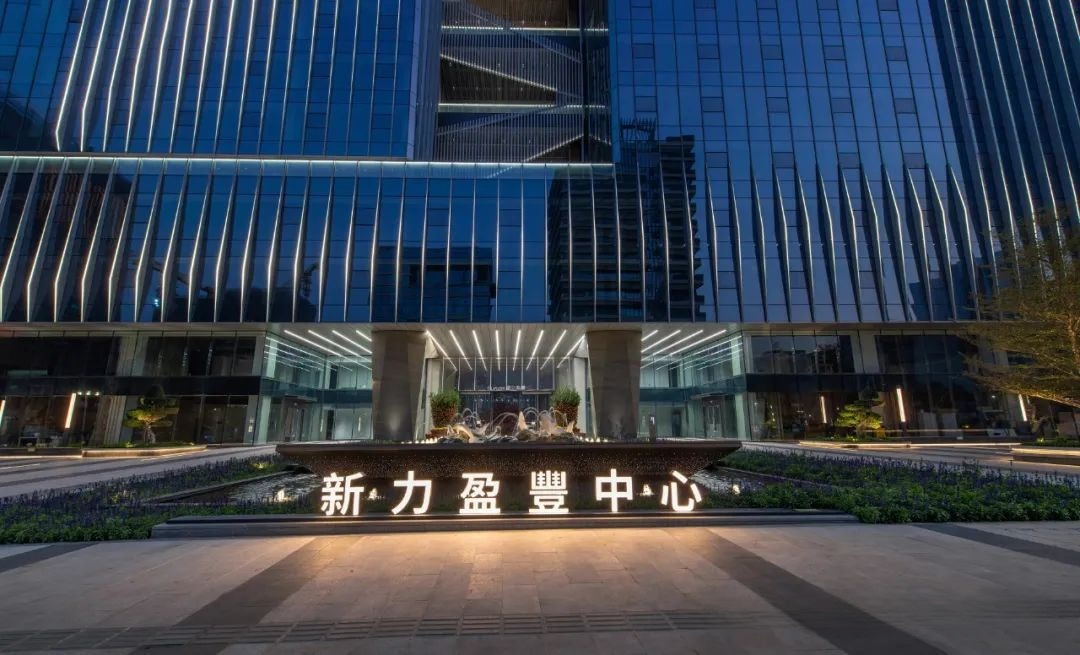
At the human scale, the sequential arrangement of the decorative fins becomes even more pronounced. The undulating interplay of light and shadow not only maintains consistency and continuity in the overall lighting language, but also strengthens the visual connection between interior and exterior spaces. As a result, the building presents a more cohesive and integrated nighttime image.
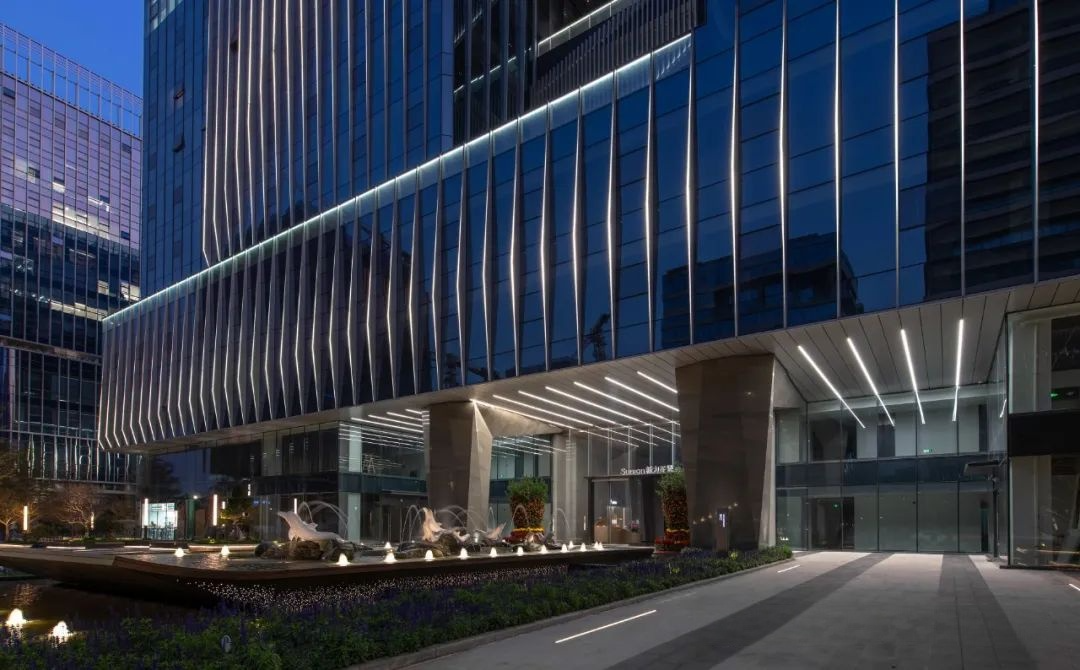
Even when viewed from below, the combined variation of light intensity and vertical height can be perceived, allowing the lighting design to convey a sense of dynamic movement within a fundamentally static architectural form.
The luminaires are concealed within the curtain wall system, using reflected light to express the vertical light slots. Reflected lighting is generally softer than direct illumination and is carefully planned according to spatial scale, form, and functional requirements to achieve optimal light distribution and visual comfort.
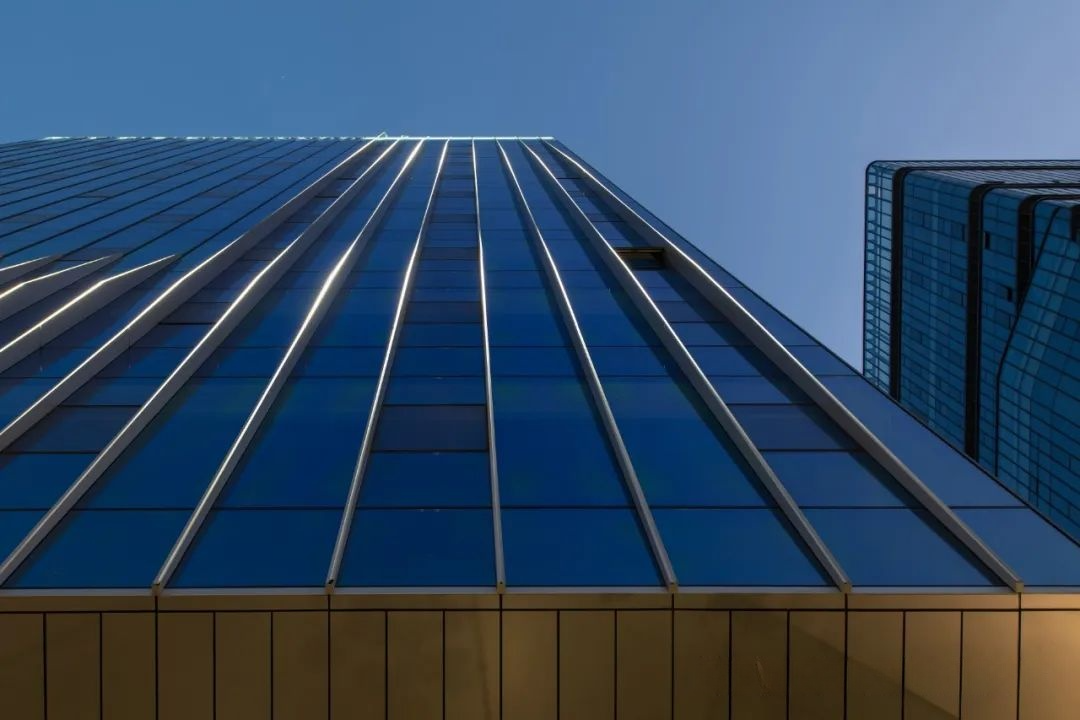
As night deepens, downlighting shapes a restrained and natural skyline at the top of the towers. The effect of light allows the architecture to stand out against the night sky, while blending seamlessly with the residual glow of the sunset.
At the podium’s folded façade surfaces, a combination of in-ground luminaires and floodlights is used to evenly illuminate the planes and emphasize their geometric transitions. This approach enhances the three-dimensional relationship between architectural surfaces while eliminating the need to perforate aluminum panels for recessed downlights. The use of in-ground lighting also facilitates easier maintenance in the future.